
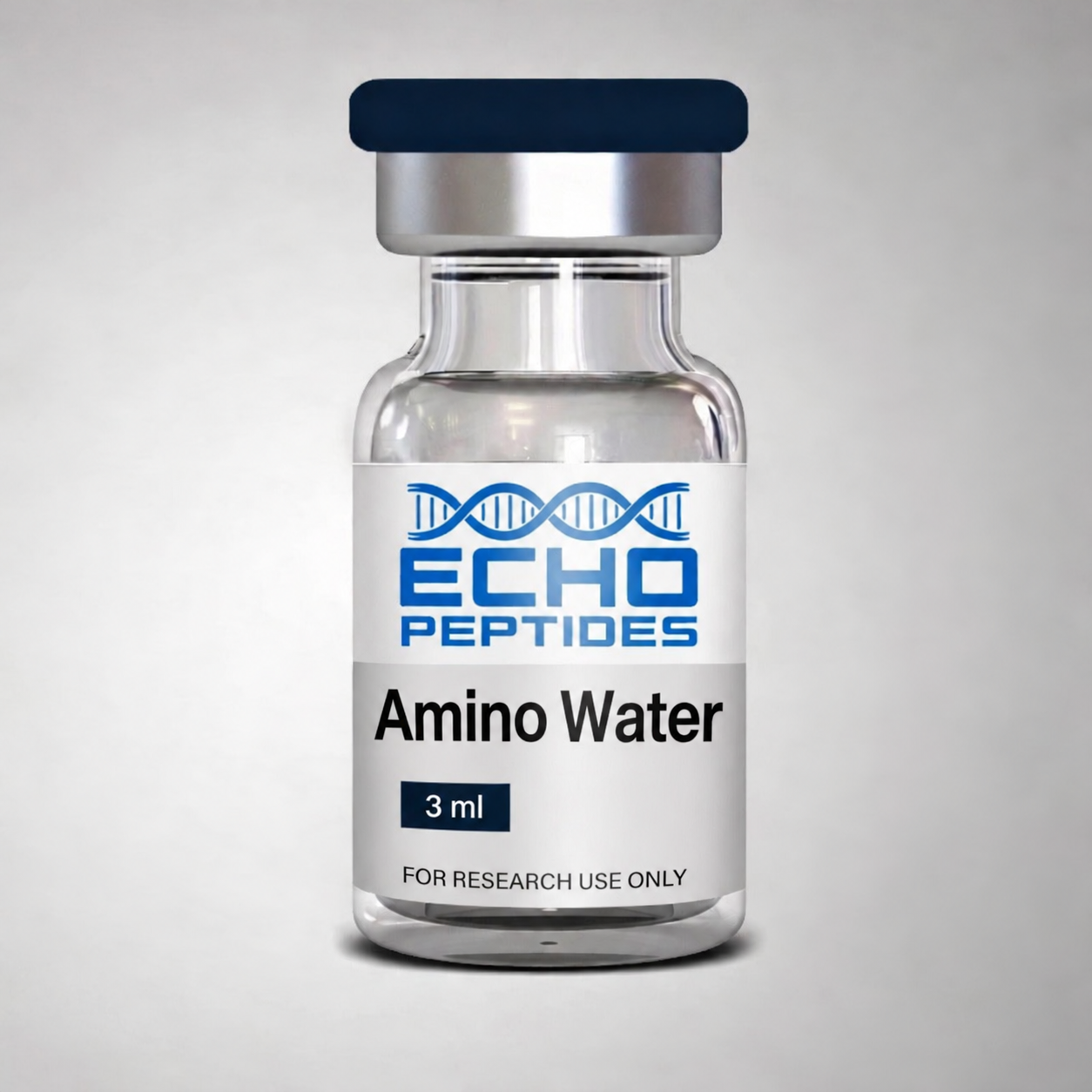

Bacteriostatic water is sterile water containing 0.9% benzyl alcohol. It is the one category on this site that is not a research article in its own right — nothing here is a reference compound, and neither product page carries a sequence, a CAS number or a molecular weight. Its job is to take a vial of lyophilized powder back into solution at a defined concentration, and then keep that solution usable.
The 0.9% benzyl alcohol is a bacteriostatic preservative: it inhibits the growth of common bacterial contaminants. That single difference from plain sterile water is the reason the format exists. Sterile water is a single-use proposition, while a preserved vial can be entered and drawn from across a working period — which is what multi-point protocols and serial dilutions from one stock require. Keep the vial sealed between withdrawals and use standard aseptic bench technique either way.
Both vials hold the same fluid, so the choice is arithmetic. Diluent volume is what sets the concentration of whatever you reconstitute: a 10mg peptide vial taken up in 1mL gives 10mg/mL, in 2mL gives 5mg/mL, in 5mL gives 2mg/mL. The 3mL vial covers a single reconstitution at typical stock volumes; the 10mL covers several, or one larger stock. Since every lyophilized peptide and blend in this catalog is reconstituted in bacteriostatic water or a comparable sterile buffer, the sizing question is really how many vials you expect to open, and at what concentration. Both volumes are stored at room temperature or refrigerated.
Neither volume has a certificate of analysis published at present — both cards above read "COA pending publication," and a certificate is available on request.